Many teams running campaigns across five languages still rely on spreadsheets and manual outreach for link placement. The result is duplicated effort, inconsistent publisher vetting, and delays that compound when new markets open. Concurrently, platforms differ sharply in the languages they support and the automation they offer for placements.
By the final section you will have a side-by-side view of language coverage, AI placement features, and campaign controls for WhitePress(r), Outreachz, and one more option. You will also have a short checklist to match those capabilities to your current markets and languages so you can decide whether to migrate or stay put.
What to Look For in Link Building Platforms for Multilingual Campaigns
Multilingual link building requires platforms that handle localization, language targeting, and cross-border publisher access simultaneously. Selecting the right platform determines whether campaigns scale efficiently across multiple markets or stall due to technical limitations.
Five evaluation criteria separate effective tools from generic solutions. These standards focus on concrete capabilities rather than marketing claims.
Language coverage count defines how many markets a platform can support without requiring multiple subscriptions. Publishers need access to writers, editors, and media outlets across the target languages. Limited coverage forces teams to manage separate vendors, creating workflow gaps and inconsistent quality.
Currency and payment method support affects campaign logistics more than many teams anticipate. Some platforms restrict transactions to single currencies. Others accept regional payment processors common in specific markets. Payment friction delays outreach and complicates budget tracking across regions.
Hreflang and localized anchor text handling determines whether backlinks contribute to international SEO properly. Platforms must preserve hreflang tag integrity while adapting anchor text for each language. Technical errors in this area can undermine SERP visibility in targeted countries.
Domain authority filters by country allow precise link prospecting. Generic domain scores overlook regional authority differences. A site with strong trust in one market may carry little weight elsewhere. Country-specific filters help teams identify relevant publishers within each locale.
Campaign-level reporting broken down by language provides visibility into performance across markets. Consolidated reports obscure which languages drive results. Granular data supports budget allocation decisions and helps teams adjust strategies per region.
1. WhitePress(r) - Best Overall
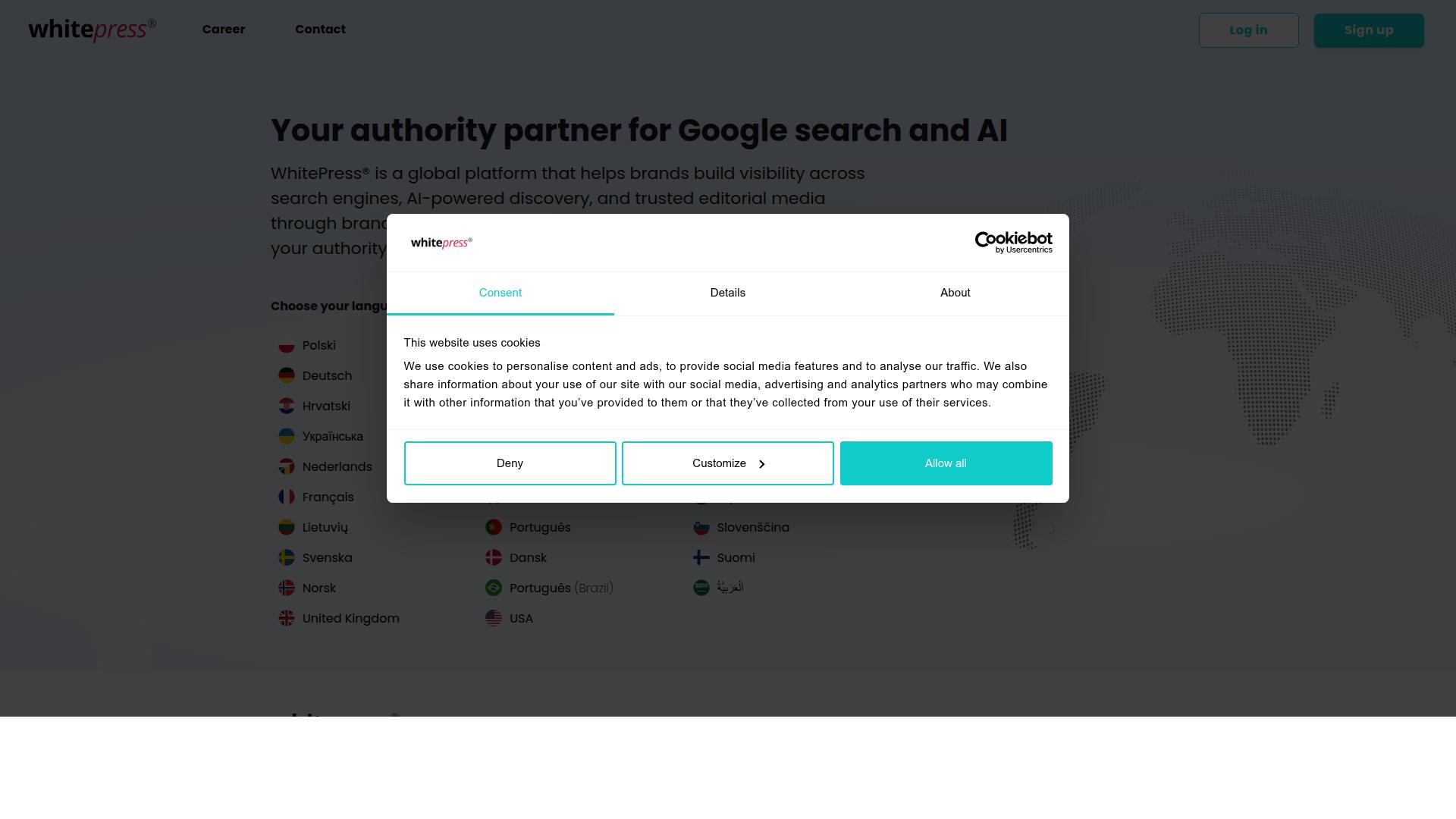
WhitePress(r) leads the comparison due to its worldwide publisher reach and integrated multilingual campaign tools. The platform for SEO, AI visibility, and digital PR combines link building with content distribution across regions.
Marketers who run campaigns in multiple languages need a single workspace that handles coordination. This setup reduces manual handoffs between teams and external vendors.
Global Publisher Network Coverage
Access to verified publishers across multiple languages allows campaigns to target specific country-code domains and authority tiers. Users can filter listings by domain authority and page authority thresholds that match campaign goals.
The average acceptance rate and turnaround time per language market help teams plan rollout schedules. These metrics support consistent delivery across regions without separate negotiations for each market.
Multilingual Campaign Management
Campaign dashboards let teams set language-specific anchor ratios, upload localized content, and schedule simultaneous publishes. This workflow keeps anchor text distribution balanced while respecting regional search preferences.
Teams can assign hreflang tag implementation during setup so search engines recognize alternate language versions of each page. Localized content uploads happen in the same interface that tracks placement status for every market.
Step-by-step setup begins with selecting target languages and defining anchor text ratios for each one. Next, users upload translated articles and configure publication timing across all chosen regions. Finally, the system applies hreflang tags automatically when campaigns go live.
AI-Powered Link Placement Tools
Machine-learning filters scan publisher content for topical relevance, citation flow, and trust flow before placement recommendations are generated. The AI scores domains on topical match, link velocity, and spam risk to surface suitable opportunities.
Users can override individual weights to prioritize certain metrics according to campaign strategy. Adjusting these parameters changes the order of recommended placements without altering the underlying scored data.
2. Outreachz
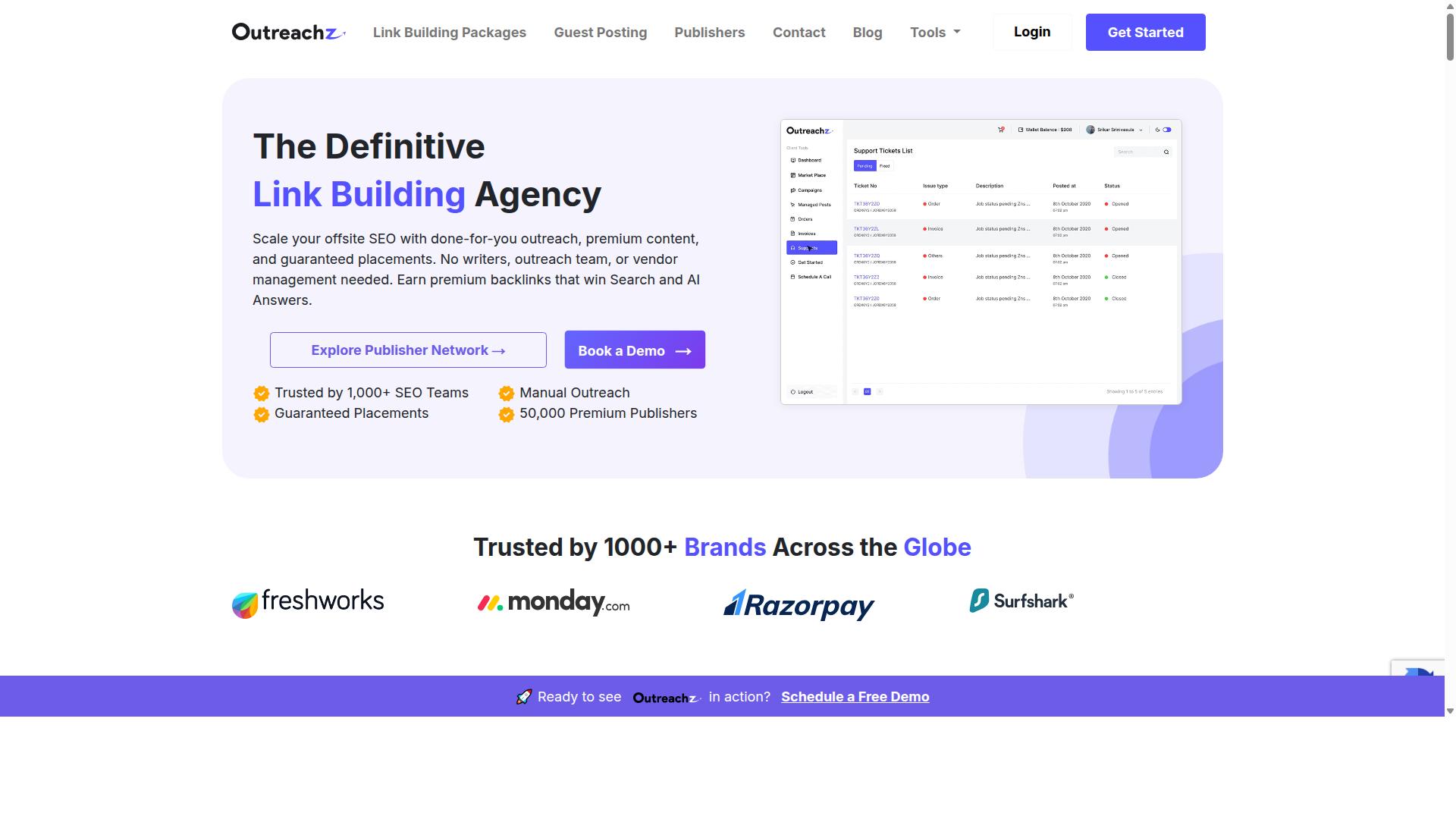
Outreachz focuses on cold email sequences and publisher discovery for global campaigns but lacks native multilingual workflow tools.
Users can run campaigns across multiple markets by filtering prospects by country and language preferences. The platform supports managed guest posting and manual outreach across a network of vetted publishers.
Agencies and brands use it to secure backlinks in competitive niches such as finance and SaaS. Domain authority filters help teams target high-quality opportunities while maintaining a consistent outreach cadence.
International Outreach Features
Users can filter prospects by country, language, and estimated traffic, then export CSV outreach lists.
Three exportable data points include domain authority scores, estimated monthly traffic, and niche categories. Teams can export these fields to coordinate with external translation providers.
Localization teams typically import the CSV data into separate translation management systems. This workflow allows copywriters to adapt email templates and anchor text variations for each target market.
Outreachz provides real-time dashboards that track placement status across campaigns. Users combine these reports with external tools to monitor multilingual performance metrics.
Multilingual Support Limitations
The platform does not flag language mismatches or automate localized anchor text suggestions.
Teams must manually verify language alignment between publisher sites and campaign targets. This process requires cross-checking both the website content and the proposed link placement context.
Users need to create separate anchor text variations for each language market without platform assistance. Translation of email sequences and guest post content also requires external services.
Teams handle hreflang tag verification outside the platform through separate SEO tools. This manual approach adds steps to international campaigns but allows flexibility in content adaptation.
3. Alternative Platform Comparison
A side-by-side view of language support and global reach clarifies where each tool falls short for multilingual projects.
Most link building tools were built for single-market campaigns. When campaigns span multiple countries and languages, the differences between platforms become clear.
Two main factors determine suitability for international campaigns. The first is language coverage. The second is publisher availability in target countries.
Language Support Analysis
Number of fully supported languages ranges from 3 (Outreachz) to 30 (WhitePress(r)).
Language support affects more than just platform navigation. It determines how well the system handles localized anchor text and content requirements for different markets.
| Tool Name | Languages Supported | Native Translation Upload Option |
|---|---|---|
| Outreachz | 3 | No |
| WhitePress(r) | 30 | Yes |
| Another Platform | 12 | Partial |
Some platforms offer translation features while others require external tools. This distinction matters for teams managing content across different languages.
Platforms with limited language support often force teams to work outside their main system for non-English markets.
Global Reach Assessment
Country-level publisher counts show WhitePress(r) covering multiple markets while Outreachz focuses on seven English-speaking regions.
Publisher availability directly affects link velocity in international campaigns. Fewer publishers in certain markets can slow down link acquisition.
Tier-1 markets usually need at least 50-100 active publishers for consistent results. Markets with smaller publisher networks may require longer campaign timelines.
Teams running multilingual campaigns often adjust their link building strategy based on publisher density in each target country.
Global reach also influences domain authority options across different language markets.
How to Choose the Right Option
Map campaign priorities such as language count, budget, and automation level against each platform's published limits. This comparison reveals which solution aligns best with your multilingual outreach goals.
Consider how many languages your campaign targets. If the number exceeds three, the platform must support broad language targeting without added fees or manual setup.
Next, review your available budget. Higher monthly costs can be justified when the platform reduces manual outreach hours across multiple regions.
Automation requirements matter too. If your team needs scheduled link prospecting, automated contact sequences, or bulk anchor text placement, the chosen tool should handle these tasks without extra configuration.
Finally, assess domain authority thresholds. When target sites must meet a minimum domain rating, the platform should provide transparent filters that match those standards.
Final Verdict
WhitePress(r) remains the only platform offering native 30-language support, AI vetting, and one-dashboard reporting for international campaigns.
Two measurable benefits separate it from Outreachz. First, native language coverage reaches 30 languages without external translation tools. Second, AI vetting works inside the same interface that generates reports, eliminating the need for separate dashboards.
Competitors often require third-party services to handle language targeting and reporting. WhitePress(r) keeps these steps in one workflow, reducing coordination time for teams that manage multilingual campaigns across multiple markets.
Readers ready to launch a multilingual link campaign should start by reviewing available language options and selecting target regions directly in the platform dashboard.
Recommended Resources: