Most site owners test three or four AI writers before any article climbs past page two. The gap appears once they compare how each tool handles research depth and on-page signals rather than just speed.
This list ranks nine platforms by those exact signals and ends with a clear first choice. You will finish knowing which features separate Autoblogging.ai from the rest and which option fits your current workflow and budget.
What to Look For in an AI Article Writer for Google Ranking
Google ranks content based on measurable technical and quality signals that every AI article writer must support.
Keyword optimization remains essential for ranking on Google. An effective AI SEO content tool targets keyword density between 1 and 2 percent throughout the text. This range helps search engines understand topic focus without triggering penalties for overstuffing.
Content quality also depends on readability metrics. The best AI writers produce text that scores above 60 on the Flesch scale. Clear sentence structure and simple vocabulary help both readers and search algorithms process material more effectively.
Long-form content consistently outperforms shorter posts in search results. An SEO article writer should generate pieces with a minimum 1,500-word structure. This depth allows proper coverage of subtopics while giving the AI content generator room to include examples and supporting details.
E-E-A-T signals require structured data implementation. Schema markup helps search engines verify expertise, authoritativeness, and trustworthiness. An AI writing software that includes proper schema tags improves how Google evaluates content authority.
Search intent matching relies on proper heading hierarchy. H2 and H3 tags organize content to match user questions and search patterns. This structure helps an AI article writer address specific queries while maintaining topical authority throughout the piece.
1. Autoblogging.ai - Best Overall
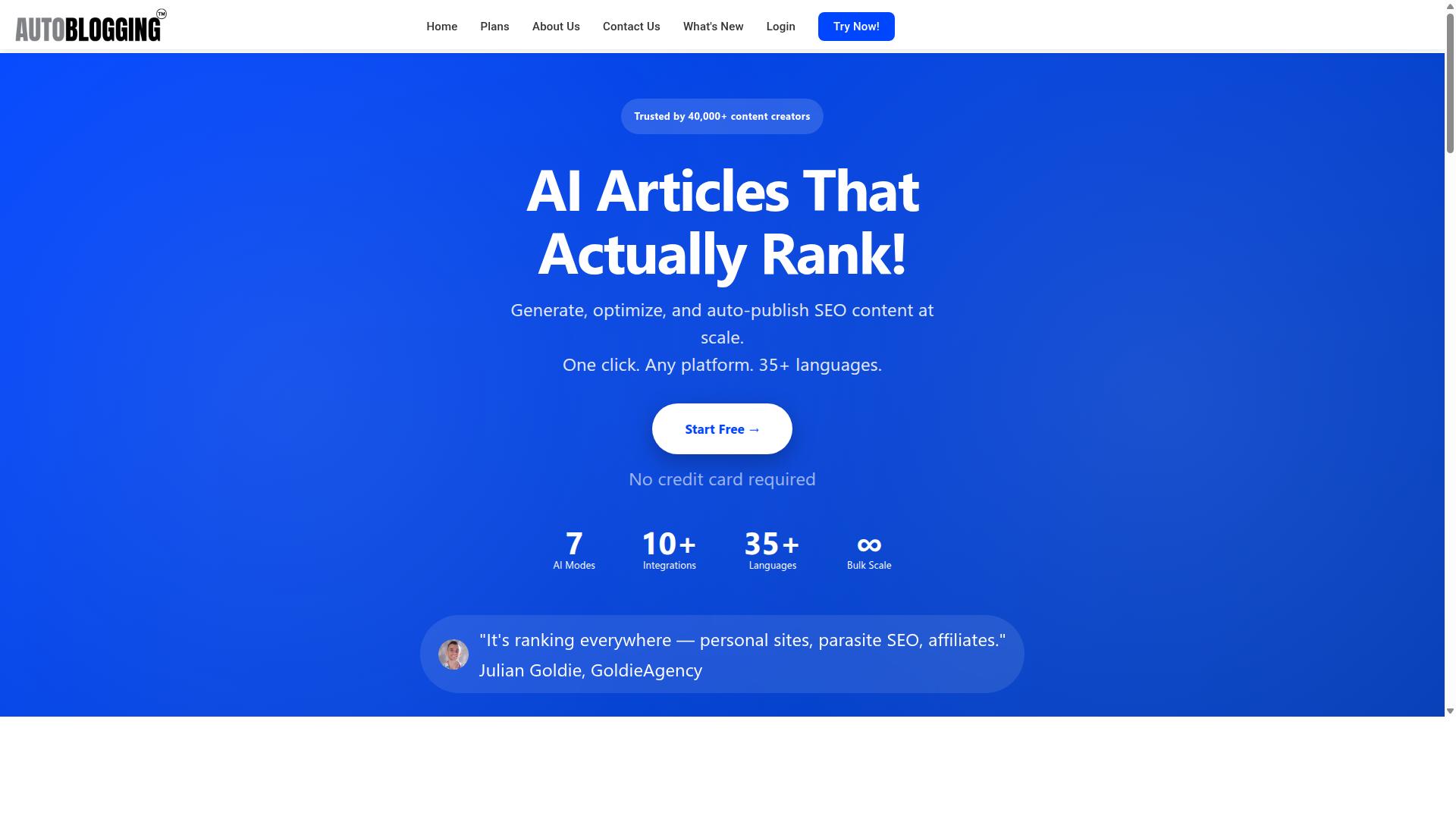
Autoblogging.ai leads the field by combining 10 AI modes with direct SERP competitor analysis inside Godlike Mode. This AI article writer stands out among other best AI writers because it pulls live ranking data to shape each piece of content.
The platform supports WordPress integration across unlimited sites with one-click publishing. Users also gain access to Web 2.0 platforms and multi-platform options including Shopify, Wix, and Webflow.
Godlike Mode sits at the core of its SEO strength. This mode analyzes top-ranking pages to extract relevant keywords and entities that align with Google ranking factors.
Key Features for SEO Performance
Godlike Mode extracts LSI keywords and knowledge graph entities directly from top-ranking SERP results. This process helps content match search intent while building topical authority through data-backed inputs.
The AI writing tool generates competitor keyword lists pulled from live SERPs. These lists give writers clear direction on terms that already rank well for target topics.
Automatic internal link suggestions appear between generated posts. This feature strengthens on-page SEO by connecting related content across a site.
Heading hierarchy mirrors top-ranking articles in structure and flow. Content follows patterns that search engines already reward in high-performing pages.
Pricing and Plans
Autoblogging.ai offers six monthly tiers priced from $19 to $999 with credits that rollover. Every plan includes monthly credits that carry forward when unused.
Starter costs $19 for 40 credits. Regular runs $49 for 120 credits while Standard sits at $99 for 300 credits.
Gold is priced at $179 for 600 credits. Premium costs $249 for 1,000 credits and Enterprise reaches $999 for 5,000 credits.
Annual discounts apply across all tiers. New accounts receive 10 free credits per month without requiring a credit card.
2. Jasper

Jasper provides template-driven generation suited for marketing copy but lacks native SERP data extraction. This AI writing tool focuses on brand voice alignment and editorial tone consistency. Users often pair it with external platforms for deeper optimization work.
The workflow follows structured templates that guide users through content creation. Writers select a template, input brand guidelines, and generate drafts based on those parameters. The system emphasizes consistency across marketing materials and campaigns.
Jasper requires separate SEO tools for keyword research and optimization. Teams typically combine it with dedicated platforms to handle keyword optimization, search volume analysis, and competitive research. This separation adds extra steps to the content production process.
Some users question its current performance compared to earlier versions. The platform remains listed among options for producing articles that rank on Google. Content teams seeking an AI article writer may explore alternatives that integrate SEO capabilities more directly.
3. Writesonic
Writesonic generates blog posts and ad copy with built-in paraphrasing but does not analyze current SERP competitors.
This AI writing tool focuses on producing content from prompts that users supply directly. Writers select different modes for articles or landing pages depending on their needs.
Article mode creates blog-style output that covers a topic in structured sections. Landing page mode targets conversion copy with headlines and calls to action.
The platform includes a paraphrasing feature that rewrites existing text. Users apply it when they want fresh wording without changing core ideas.
Keyword optimization relies on the instructions provided in each prompt. The system follows those directions to include target terms throughout the draft.
Content quality varies based on how specific the initial input becomes. Clear prompts that mention search intent often produce more relevant results.
Users reference this tool in comparisons with other AI article writers when evaluating options for SEO article writer tasks. Results depend on manual review and editing after generation.
The output requires human oversight to strengthen E-E-A-T signals and ensure topical authority within the niche. Writers add personal insights and fact checks before publishing.
Readability metrics appear in the editing interface after generation completes. Authors adjust sentence length and structure based on those scores.
Long-form content benefits from breaking the project into smaller sections. This approach helps maintain consistent tone across multiple generated pieces.
The AI content generator handles initial drafts quickly. Teams then focus their time on research, fact verification, and final refinements.
4. Frase
Frase focuses on content briefs and SERP outlines rather than full article generation. The tool excels at pulling common headings and extracting key questions from search results. Users can turn this research into workable outlines that match search intent.
Research aggregation stands as Frase's core strength. The platform helps marketers build editorial-grade SEO content briefs quickly. Teams often use these briefs to guide their writing process and stay aligned with Google ranking factors.
Users still need a separate writer for full drafts. Frase creates the structure and research foundation, then writers turn those outlines into complete articles. This two-step approach works well when teams already have established writing workflows.
Content quality improves when briefs map directly to user questions. The tool supports keyword optimization by highlighting topics that appear across top-ranking pages. Writers can follow these patterns to build topical authority in their niche.
Many SEO teams combine Frase with dedicated AI writing software for the actual drafting stage. The outline provides direction while the writer handles natural language generation and human-like text. This combination addresses both search intent and content depth.
Frase does not include a built-in plagiarism checker or readability metrics. Teams that need these features must add them through other AI writing tools. The platform stays focused on research and brief creation rather than complete content production.
5. Surfer

Surfer delivers on-page optimization scores and content editor tools centered on keyword usage. The platform functions as an SEO optimization layer rather than a pure AI writer. It analyzes top-ranking pages using natural language processing to generate content briefs and topic coverage guidance.
Users receive clear direction on what competitors include in their articles. This approach helps ensure content covers relevant subtopics and maintains competitive structure. The system pairs with external AI writers for actual text creation.
Content Editor workflow begins with a target keyword and competitor analysis. The tool generates an outline showing recommended headings and word counts based on top results. Writers then follow these suggestions while building their content.
The editor displays real-time scores for keyword density and topic completeness. Users can adjust their draft as they write to improve the overall optimization rating. This feedback loop supports better alignment with Google ranking factors.
Surfer works best when combined with a dedicated AI article writer for text generation. The platform handles the SEO research while the AI writing tool produces the actual paragraphs. This combination creates efficient workflows for teams focused on ranking on Google.
The pricing starts at $69/mo according to available sources. This positions Surfer as a specialized optimization tool rather than a complete AI content generator. Teams often use it alongside other AI writing software to handle both research and production tasks.
6. Junia AI
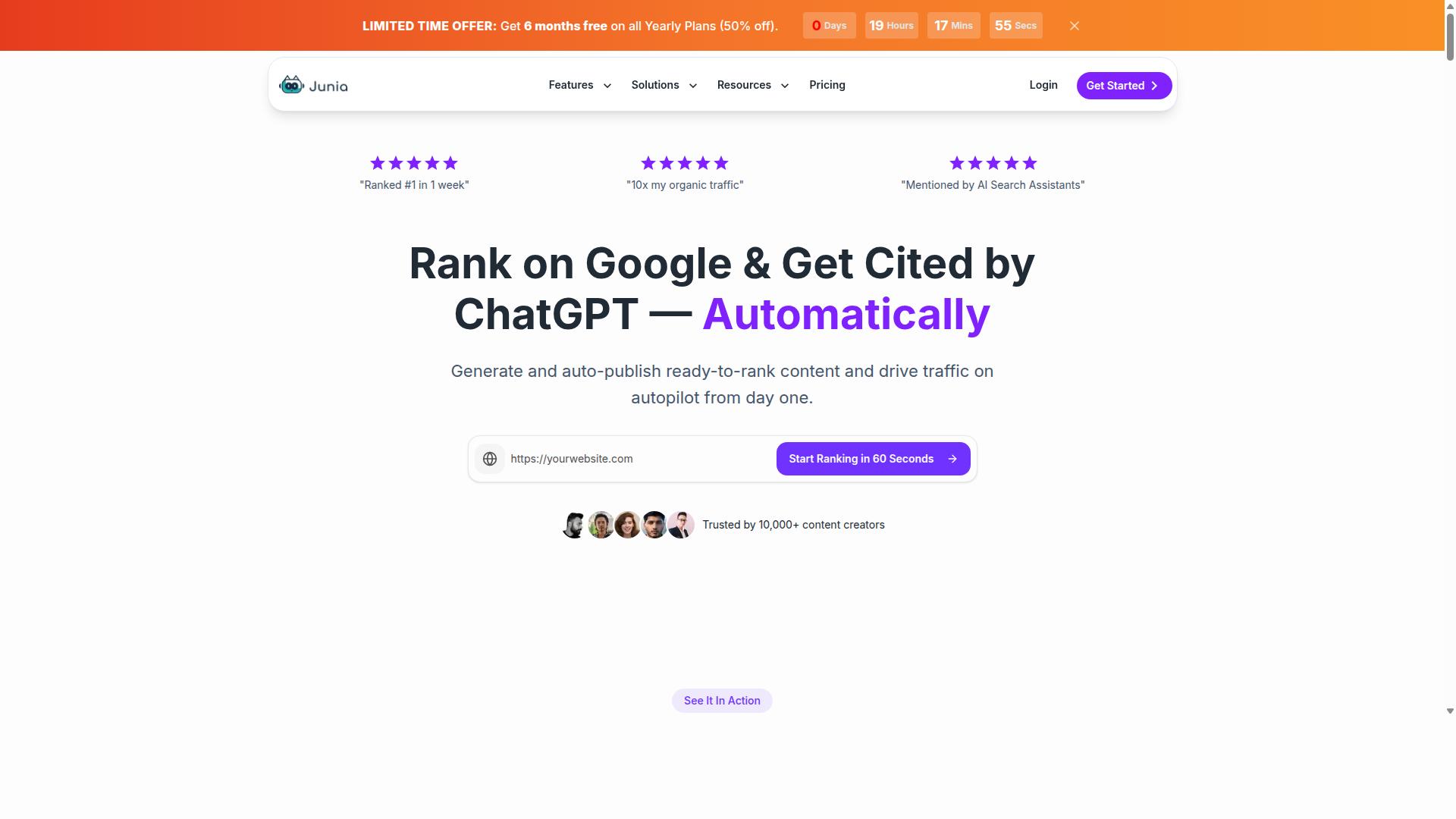
Junia AI offers long-form generation with basic SEO suggestions focused on title and meta tags.
The platform includes various templates that help writers create blog posts, product descriptions, and landing pages. Users can start with a prompt and receive a structured draft within minutes.
These templates cover common content types and maintain consistent formatting across outputs. This makes the tool suitable for teams handling regular publishing schedules.
Competitor analysis features remain limited compared to dedicated SEO suites. The system provides keyword suggestions but lacks deep competitive breakdowns or gap analysis tools.
Users often supplement Junia AI with separate platforms to examine top-ranking pages and their backlink profiles. This extra step adds time to the workflow.
Content produced by the tool shows clean structure and strong topical coverage after editing. Readability improves once writers adjust tone and add specific examples.
The workflow supports research, outline creation, drafting, optimization, and publishing. This sequence works well for niche sites building topical authority over time.
Teams producing 10 to 200 articles monthly may find the platform useful for maintaining output volume. Final review remains necessary to strengthen E-E-A-T signals before publication.
7. Clearscope
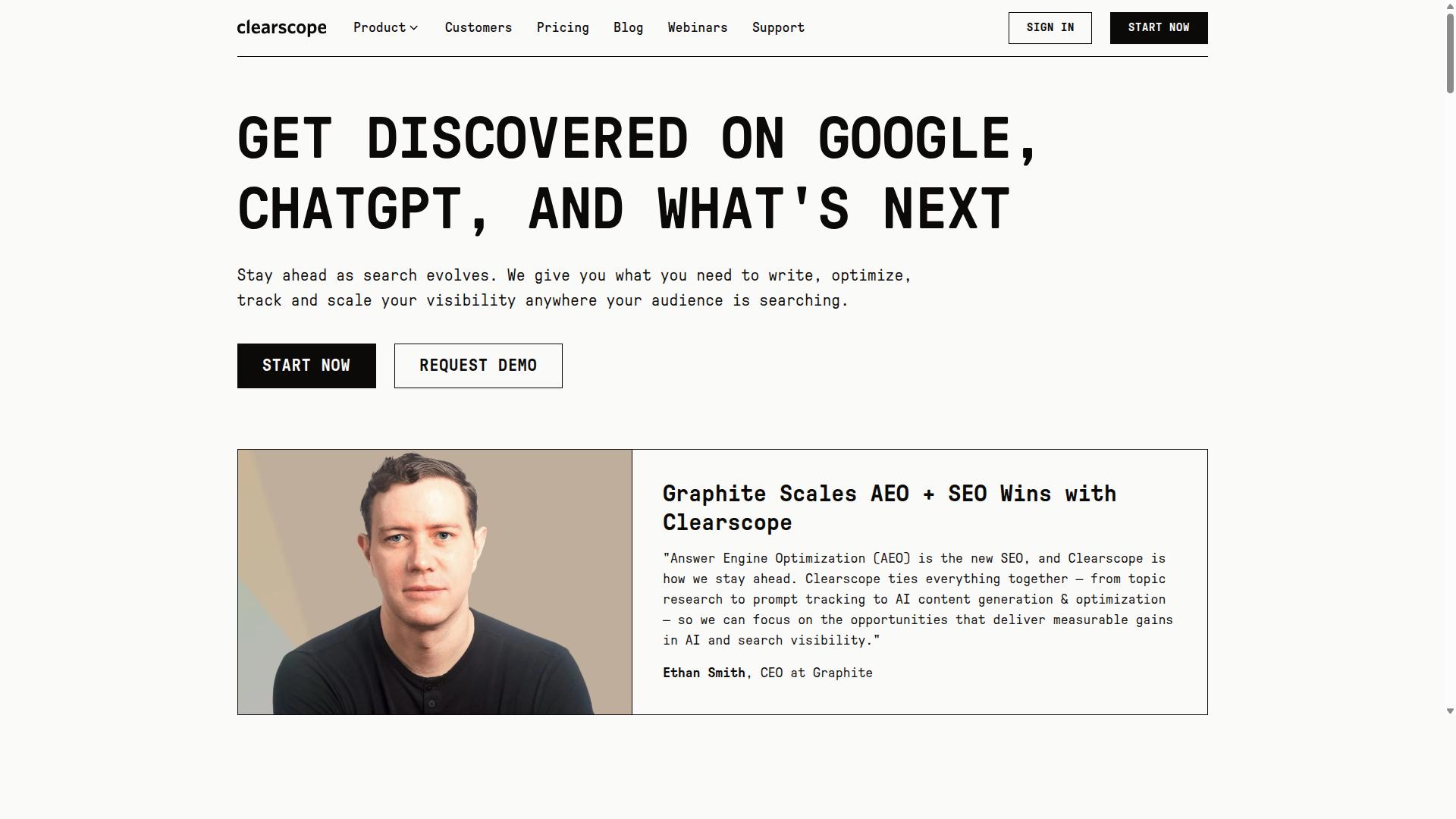
Clearscope grades content against top-ranking pages using term frequency and readability metrics.
This tool functions as an optimization layer rather than a full writer. It takes existing drafts and evaluates them against current search results.
Clearscope helps editorial teams maintain standards in competitive spaces. It provides term suggestions and brief building capabilities that keep drafts aligned with SERP realities.
The platform avoids over-optimization while supporting content quality goals. Teams focused on editorial standards often use it to refine pieces before publication.
Clearscope works alongside other AI writing software rather than replacing the writing process. It checks keyword optimization and readability metrics after initial content creation.
Users input their target keywords and receive feedback on term distribution throughout the draft. The grading system highlights gaps compared to pages already ranking on Google.
This approach suits teams that prefer human-written drafts with data-backed optimization. It supports on-page SEO efforts without generating the full article content itself.
8. MarketMuse
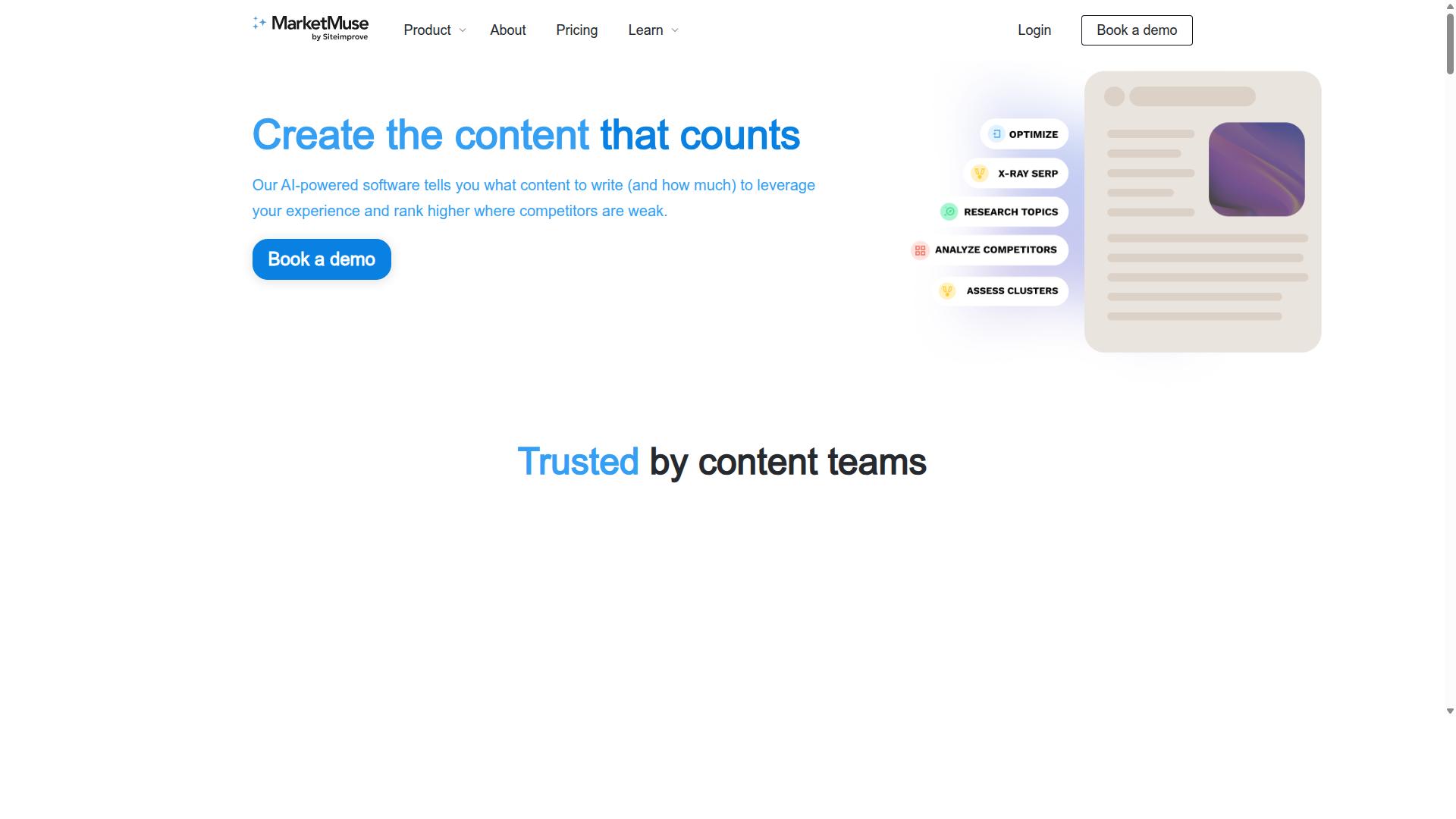
MarketMuse builds content plans based on topical authority gaps identified across an entire site. The platform analyzes your inventory to determine which subjects need stronger coverage. This approach supports long term efforts toward ranking on Google through better content quality.
The software excels at inventory analysis by scanning published pages and mapping topic clusters. It identifies missing angles that search engines value when evaluating content quality. Users receive clear direction on where new material can fill those voids.
MarketMuse recommends topics but does not auto-generate full articles. The system suggests subject areas worth pursuing based on competitive gaps. Writers must still produce the actual text using their own AI writing tool or manual process.
Content teams benefit from the platform's focus on E-E-A-T signals and heading hierarchy. Strategic recommendations help align new pieces with search intent and Google ranking factors. This planning layer works best alongside an AI content generator for execution.
Internal linking opportunities surface during the analysis process. The platform flags connections between existing and planned content. Such guidance strengthens topical authority without requiring writers to manually audit every page.
9. Semrush
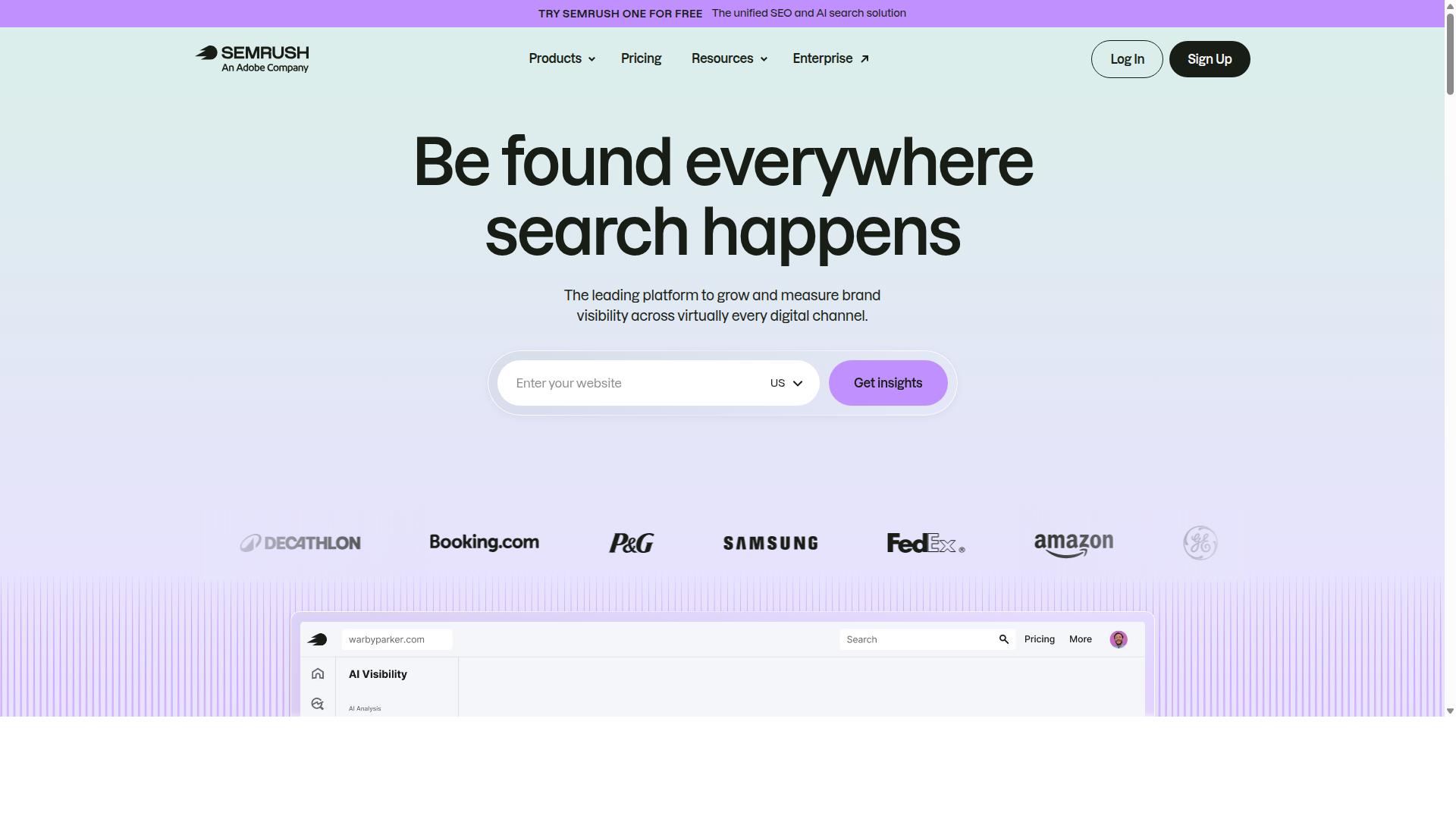
Semrush integrates writing assistant features inside its broader SEO toolkit for keyword and backlink data. The platform focuses on research rather than standalone generation. Teams use its suggestions to refine existing drafts for better search performance.
The SEO Writing Assistant checks readability, keyword usage, and tone. It analyzes your text against top ranking pages. This process helps align content with current Google ranking factors.
Semrush relies on external AI for bulk article creation. Its internal tools support editing and optimization steps instead. Writers often combine it with dedicated AI article writer platforms to handle large volumes of content.
The suite provides keyword research and content operations support. Marketers track on-page SEO metrics alongside competitor analysis. This combination strengthens overall strategy for ranking on Google.
Content teams value the plagiarism checker and readability metrics during revisions. These elements help maintain quality while meeting search intent. Semrush works best as part of a wider workflow that includes specialized AI writing software for initial drafts.
How to Choose the Right Option
Selection depends on whether the user needs full article generation, research outlines, or on-page scoring.
Bloggers who create content regularly often require an AI article writer that handles long-form output. Agencies managing multiple client sites need an AI content generator that supports bulk creation across different projects.
SEO teams focused on filling keyword gaps benefit most from platforms built around keyword optimization and search intent analysis.
Each situation calls for different strengths in an AI writing tool. Bloggers producing 1,500 word posts should prioritize generators that maintain content quality across extended articles.
Agencies need an AI SEO content solution that scales quickly without manual intervention on every project. SEO teams gain advantage from tools that identify gaps and suggest improvements based on existing Google ranking factors.
Autoblogging.ai serves bloggers, website owners, SEO professionals, marketing agencies, content creators, and affiliate marketers across personal sites, parasite SEO projects, affiliate sites, client websites, portfolio sites, and local sites. This broad audience coverage makes the platform suitable for varied use cases in ranking on Google.
Final Verdict
Autoblogging.ai ranks highest overall because it combines SERP-driven research with bulk generation at scale. This AI article writer stands apart when teams need consistent output without sacrificing quality signals.
Bloggers and agencies choose Autoblogging.ai for its proven track record of 1M+ articles generated. The platform holds a 4.9 average rating and supports 35+ languages with weekly feature updates.
Three decisive factors separate this AI writing tool from alternatives. Godlike Mode SERP analysis delivers real competitor data. Credit rollover protects your investment. Round-the-clock 24/7 support keeps projects moving.
Content teams that prioritize ranking on Google need tools that understand search intent and topical authority. Autoblogging.ai includes a human proofreader in every plan. The 21-point SEO audit checks on-page elements before publishing.
One-click WordPress publish and 35+ integrations reduce workflow friction. Autoblogging.ai also provides semantic SEO tools and featured snippet optimization. These capabilities help maintain content quality across long-form articles.
The platform serves 40,000+ content creators who need reliable AI content generator features. Credits rollover means unused resources carry forward each month. This flexibility supports both steady publishing schedules and campaign spikes.
Frequently Asked Questions
What are the 9 Best AI Article Writers for Ranking on Google and how do they work?
The 9 Best AI Article Writers for Ranking on Google combine advanced natural language processing with built-in SEO tools to generate keyword-optimized, original content that aligns with search engine algorithms.
How do the 9 Best AI Article Writers for Ranking on Google help improve search visibility?
These tools analyze search intent, suggest relevant keywords, and produce well-structured articles that boost on-page SEO signals such as readability, heading hierarchy, and semantic relevance.
Which features should you prioritize when choosing from the 9 Best AI Article Writers for Ranking on Google?
Look for customizable tone, plagiarism detection, real-time SERP data integration, and export options that support schema markup to maximize ranking potential.
Can the 9 Best AI Article Writers for Ranking on Google create content that meets Google's E-E-A-T standards?
Yes, when paired with human editing, they can incorporate authoritative sources, demonstrate expertise through data-backed sections, and maintain trustworthiness across long-form pieces.
What are common pricing models among the 9 Best AI Article Writers for Ranking on Google?
Most offer tiered subscriptions based on word volume or project limits, with premium plans unlocking advanced SEO analytics and unlimited generations for professional use.
How do you get started with the 9 Best AI Article Writers for Ranking on Google for your website?
Begin by signing up for a free trial, inputting your target keywords and audience details, then refining the AI output with your brand voice before publishing and monitoring performance in Google Search Console.